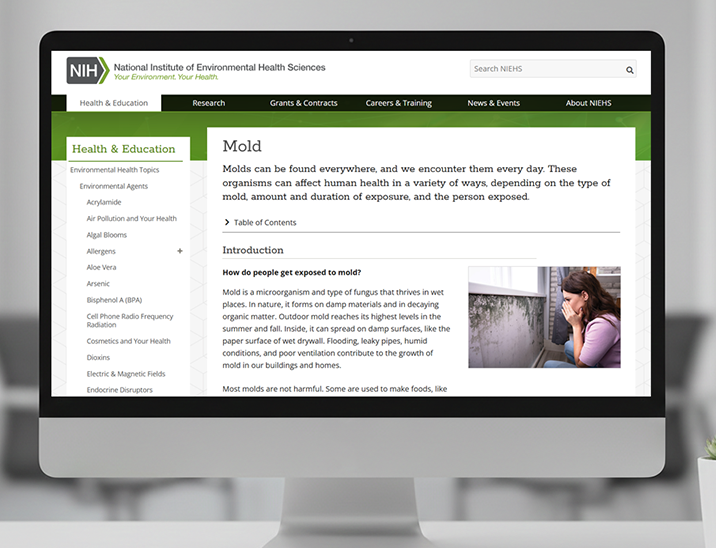


In March 2025, the National Institute of Environmental Health Sciences updated its Mold and Your Health public guidance to recognize neurological and cognitive effects associated with prolonged mold exposure, including short term memory loss, dizziness, blurred vision, tinnitus, and broader loss of cognitive function often described as brain fog. While respiratory and allergic impacts remain central, the update signals growing federal attention to brain related outcomes in indoor air quality policy and underscores the need for early detection, moisture control, and clinical sound remediation in housing and public facilities.


The MOLD Act — What Congress Is Considering for FY2027 Military Housing Reform
Congress is currently considering a bipartisan bill proposal for Fiscal Year 2027 called the Military Occupancy Living Defense Act, commonly referred to as the MOLD Act. This legislation is designed to address long standing and widespread issues with unsafe living conditions in privatized military housing, especially problems tied to mold, water intrusion, humidity, ventilation failures, and other environmental hazards that harm servicemembers and their families.
It is important to note that this is a bill proposal in the early stages of the 119th Congress and has not yet become law. It will face committee review, negotiation, potential amendment, and votes in both the Senate and the House before any enactment can occur. Supporters hope it advances in the 2026 legislative calendar and could be included in defense policy packages or move forward as standalone legislation tied to FY2027 housing reforms.
While still a proposal, the MOLD Act outlines a comprehensive approach to improving military family housing.
The bill would require the Department of Defense to adopt consistent and enforceable standards for military housing. These standards would address indoor humidity, moisture intrusion, ventilation, and building envelope failures that contribute directly to mold growth and environmental contamination.
Privatized military housing would be subject to inspections by certified third party professionals. These inspections would occur at turnover, after resident complaints, and following remediation work. Results would be permanently recorded and shared with tenants and installation housing offices.
The bill calls for centralized reporting tools where families can submit complaints about water damage, mold, humidity problems, or safety concerns. Housing offices would be required to respond within defined timeframes and track cases through resolution.
Under the proposal, private housing companies would be responsible for inspection costs, repairs, remediation, relocation when homes are uninhabitable, reimbursement for losses tied to unsafe conditions, and housing allowance refunds where appropriate.
Maintenance workers, mold assessors, and remediation professionals would be required to hold recognized third party certifications and follow nationally accepted remediation standards.
The Department of Defense would be required to report housing conditions, inspection outcomes, remediation performance, and contractor compliance to Congress and in public summaries so progress can be evaluated over time.
Hundreds of thousands of servicemembers and their families live in privatized military housing nationwide. Many have reported mold, water intrusion, and environmental hazards that have led to health problems, property loss, and financial burden, with inconsistent oversight and limited accountability under current systems.
Advocates argue that enforceable standards, independent inspections, transparent reporting, and clear accountability would meaningfully improve housing conditions and strengthen readiness by ensuring families live in safe and healthy environments.
Because the MOLD Act is still a proposal, it must clear several hurdles before becoming law.
There is no guarantee it will advance or emerge unchanged from the legislative process. Its introduction nonetheless reflects growing bipartisan recognition of systemic failures in privatized military housing and a renewed push to address them comprehensively.
Choose who you'd like to speak with. Both sessions are available by video or phone — book a time that works for you.
An initial consultation with BeyondMold's leading expert in mold illness recovery — personalised guidance on your path forward.
Book with Dr. Heyman →A focused session with a certified BeyondMold coach — practical advice and guidance on your recovery journey.
Book a coach session →